Dubai Land Residence Complex has quietly become one of the most talked-about budget entry points into Dubai’s freehold apartment market — and one of the most misunderstood. Search for “DLRC investment guide” and you’ll find rental yield claims ranging from 5.4% to 11%, confident statements that a metro station is “coming to DLRC,” and glossy project brochures that never mention who’s actually building next door.
This guide gives you the real picture: verified pricing and yield data as of Q1 2026, an honest resolution of the metro-access confusion, and — more importantly than any of that — a clear-eyed look at the single biggest risk factor in DLRC that most guides skip over entirely: there is no master developer here.
Published: 29 August 2026
What Is Dubai Land Residence Complex (DLRC)?
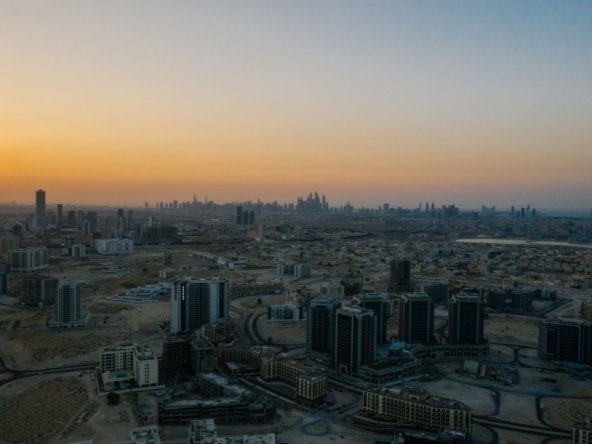
Direct answer: DLRC is a residential sub-district within the wider Dubailand master plan, located off Emirates Road and the Dubai–Al Ain Road, bordering Dubai Silicon Oasis and Dubai International Academic City. Unlike most Dubai communities you’ll research, DLRC has no single master developer — it’s a patchwork of 200+ separate mid-rise apartment buildings developed independently under project names like Maysoon, Bayz, Verdana, Sondos, Samana, and Wadan.
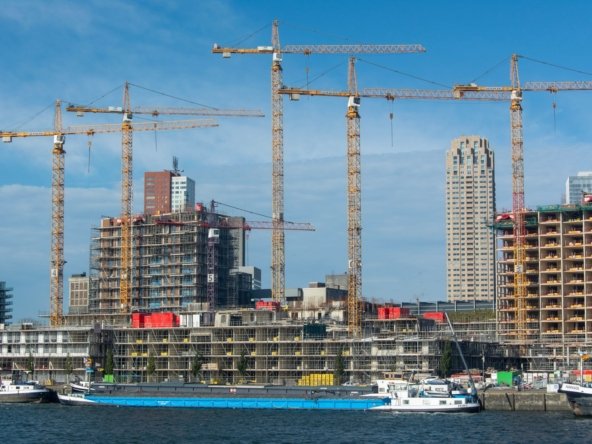
That structure is exactly what makes DLRC both attractive and risky. Because dozens of small and mid-size developers compete for the same land, entry prices have stayed well below comparable mid-market communities like Jumeirah Village Circle (JVC) or Arjan. But it also means build quality, delivery timelines, and after-handover management vary enormously from one tower to the next — there’s no single brand standard holding the whole area to one bar, the way Emaar does in Dubai Hills Estate or Nakheel does on Palm Jumeirah.
For location context, DLRC sits adjacent to Silicon Central Mall (via Dubai Silicon Oasis, across Al Ain Road) and within reach of Dubai Outlet Mall — both functioning as the area’s nearest large-format retail, since DLRC itself is still short on completed retail and community infrastructure.
DLRC Property Prices in 2026
Direct answer: Apartments in DLRC currently trade at roughly AED 800-1,200 per square foot, with studios and 1-bedroom units starting around AED 380,000-550,000 — among the lowest entry points of any freehold Dubai community with genuine rental demand.
Recorded Q1 2026 off-plan pre-registration transactions illustrate the range across current active launches:
| Project | Developer | Unit Type (Feb 2026 transaction) | Price | Price/sqft |
|---|---|---|---|---|
| Seraph by Wadan | Wadan Developments | 2-bedroom apartment | AED 1,582,781 | AED 1,132/sqft |
| Cove Grand Residence | Imtiaz Developments | Studio | AED 761,647 | AED 1,860/sqft |
| Nuvé by Zoya | Zoya | AED 202 million project launch (March 2026) | Project-wide launch value | Unit-level pricing not yet public at launch |
Note the spread even within DLRC itself — Cove Grand Residence’s studio pricing (AED 1,860/sqft) sits well above Seraph’s 2-bedroom rate (AED 1,132/sqft), reflecting how much positioning, finish level, and amenity package vary building-to-building. This is the practical, numeric proof of the “no master developer, no single price band” point above: you cannot quote one blended DLRC price per square foot and expect it to hold for any specific building you’re actually considering.
Buyers entering in 2026 are paying meaningfully more than in 2021 — most market trackers put the increase at roughly 30-50% off trough pricing — but absolute ticket sizes remain below JVC and well below Dubai Hills Estate at comparable specifications.
DLRC Rental Rates and Yields: The Real Range
Direct answer: Reported gross rental yields for DLRC apartments range from 5.4% to 11% across different sources and unit types — a wider spread than almost any other Dubai community, driven by real differences in building quality, unit type, and which data set (asking rents vs. signed contracts) a given source is using.
Here’s what the underlying rental data actually shows. Twelve-month aggregated asking rents put average annual rents at approximately:
| Unit Type | Average Asking Rent (AED/year) | Reported Gross Yield Range |
|---|---|---|
| Studio | AED 44,000 | 6.5% – 11% |
| 1-Bedroom | AED 61,000 | 6.2% – 9% |
| 2-Bedroom | AED 80,000 | 5.4% – 9.5% |
| 3-Bedroom | AED 124,000 | 7.25% – 9% |
That’s a genuinely wide range, and we’re not going to pretend otherwise. The more conservative end of the range (5.4-7.25%, from a source calculating implied yield directly off DLD-adjacent pricing) still comfortably beats Dubai’s citywide apartment average of roughly 5-7%. The higher end (8-11%, cited by sources emphasizing low entry price against strong asking rents) assumes you bought at or near the low end of the price band and are renting at or near the top of the asking-rent band — a real but not guaranteed outcome.
One data point worth flagging because it cuts against the usual pattern: several sources note 3-bedroom units in DLRC showing yield expansion rather than the yield compression you’d normally expect on larger units elsewhere in Dubai. The explanation given is steady demand for family-sized units from Academic City and Dubai Silicon Oasis professional households, against comparatively softer 3-bed sale pricing. If you’re specifically targeting yield over appreciation, larger units deserve a second look here — most Dubai investment guides tell you the opposite.
Our honest take: treat 7-9% gross as the realistic planning range for a well-located, decently managed DLRC building, and treat anything above 9% as an upside case that depends on getting both entry price and rental execution right — not a baseline assumption.
Costs That Affect Your Net Yield
Service charges in DLRC vary meaningfully by building age and amenity level — typically AED 8-14 per square foot annually, trending toward the higher end for buildings with pools, gyms, and covered parking. Layer in the standard 4% DLD transfer fee at purchase and Dubai Municipality’s housing fee (5% of annual rent, collected via DEWA), and net yields typically run 1.5-3 percentage points below the gross figures quoted above. For the full breakdown of every fee involved in a Dubai purchase, see our guide to Dubai property buying costs and DLD fees.
Before buying into any older DLRC building on the secondary market specifically, request a RERA service charge report. Some older towers in the area carry accumulating service charge arrears from previous owners or management disputes — this is a real, checkable due-diligence step, not a hypothetical risk.
The Metro Question: What’s Actually True
This is where most DLRC content online gets sloppy, and it’s worth resolving properly rather than picking whichever claim sounds more convenient.
Direct answer: DLRC does not have, and has never had, a metro station of its own. What it does have is proximity to two confirmed Dubai Metro Blue Line stations — Dubai Silicon Oasis and Dubai Academic City — both officially targeted to open 9 September 2029. As of mid-2026, the Blue Line is under construction, roughly 12% complete, with the RTA targeting 30% completion by the end of 2026.
The Blue Line is a real, funded, AED 20.5 billion project — approved November 2023, 30 kilometres of track, and confirmed as under active construction with over 3,500 personnel across 12 sites. It genuinely will connect Dubai Silicon Oasis and Academic City to Business Bay and the wider metro network for the first time. That’s a legitimate long-term catalyst for the districts bordering DLRC.
But here’s the distinction that matters for a 2026 buyer: a metro line under construction is not the same as walkable transit access today, and “nearby stations opening in 2029” is not the same as “DLRC has metro access.” Right now, DLRC is car-dependent, served only by infrequent bus routes. If your investment thesis depends on metro-driven rental demand or price appreciation, you are underwriting a 2029 assumption, not a 2026 fact — price that risk accordingly, and don’t let a listing’s “steps from the future Blue Line” language substitute for today’s real transport reality.
The Single Biggest Risk: No Master Developer
This is the point most DLRC guides gloss over, and it’s the one that actually determines whether your specific purchase performs well or badly.
In a community like Dubai Hills Estate (Emaar) or Palm Jumeirah (Nakheel), one master developer sets a consistent construction standard, manages common infrastructure, and has a long-term brand reputation riding on every building’s quality. DLRC has none of that. It’s a corridor of 200+ separate towers built by dozens of different developers — some, like Wadan and Imtiaz, are established names with delivered track records; others are smaller players with limited or no completed project history in Dubai.
That means your due diligence in DLRC has to happen at the building level, not the area level:
- Check the specific developer’s delivery history on the Dubai Land Department’s project registry and RERA’s registered projects list — not just their marketing site.
- Confirm the project is registered in Dubai’s escrow account system under RERA’s Interim Real Estate Register (Oqood) before paying any deposit on an off-plan unit.
- Ask for the building’s actual completion percentage if it’s under construction, verified against DLD’s own project status data, not the developer’s self-reported timeline.
- For secondary-market (completed) units, request the RERA service charge report and check for arrears or ongoing disputes in the owners’ association, as noted above.
None of this means DLRC is a bad place to invest — the yield and entry-price fundamentals are genuinely strong. It means you’re not buying “DLRC” as a single investment thesis the way you might buy “Dubai Hills Estate.” You’re buying one specific building from one specific developer that happens to be located in DLRC, and the building-level and developer-level diligence matters more here than almost anywhere else in Dubai.
How DLRC Compares to JVC and Dubai Hills Estate
If you’re weighing DLRC against Dubai’s two most obvious mid-market alternatives, here’s how the real numbers stack up:
| Metric | DLRC | JVC | Dubai Hills Estate |
|---|---|---|---|
| Typical price/sqft (apartments) | AED 800-1,200 | AED 1,150-1,510 | AED 1,400-2,500 |
| Entry price (studio/1BR) | From ~AED 380,000 | From ~AED 450,000 | From ~AED 700,000 |
| Gross rental yield range | 5.4% – 11% | 6.6% – 10% | 5.0% – 7.0% |
| Master developer | None — 200+ independent developers | Multiple developers, more established mix | Emaar (single master developer) |
| Metro access today | None (nearest Blue Line stations targeted 2029) | None (bus and road only) | Yes — Dubai Hills Estate has existing metro-adjacent connectivity via the Route 2020 corridor and internal community transit |
| Investment profile | Highest yield potential, highest diligence burden | Established mid-market yield play, deeper transaction history (16,785 apartment sales in the last 12 months per DLD) | Appreciation-led, lower yield, single-developer consistency |
For a full breakdown of either alternative, see our dedicated guides to the Jumeirah Village Circle area and Dubai Hills Estate area.
The honest framing: DLRC wins on entry price and headline yield potential. JVC offers a similar yield profile with a longer, more liquid transaction history and a more established developer mix. Dubai Hills Estate trades yield for developer consistency and stronger long-term appreciation backed by Emaar’s single-brand infrastructure. None of the three is objectively “best” — it depends on whether you’re optimizing for cash yield, liquidity, or capital growth with lower building-level risk.
Who Should (and Shouldn’t) Consider DLRC
DLRC tends to suit:
- Yield-focused investors comfortable doing building-level due diligence rather than relying on a single master-developer brand to de-risk the purchase.
- Buyers with a lower entry budget who want freehold ownership and real rental demand without stretching into JVC or Arjan price points.
- Investors targeting the professional-tenant pool from Dubai Silicon Oasis and Dubai International Academic City, which supports genuine, non-speculative rental demand.
DLRC is a weaker fit for:
- First-time Dubai buyers unwilling to vet individual developers — the area rewards diligence and punishes assuming “the area is fine so the building is fine.”
- Buyers prioritizing immediate lifestyle infrastructure — retail, dining, and community amenities are still catching up compared to established communities.
- Anyone underwriting near-term metro-driven appreciation — that catalyst is real but not due until 2029 at the earliest.
Frequently Asked Questions
What does DLRC stand for?
DLRC stands for Dubai Land Residence Complex (also written Dubailand Residence Complex), a residential sub-district within Dubai’s broader Dubailand master development.
Is DLRC a good investment in 2026?
DLRC offers genuinely strong yield fundamentals — entry prices around AED 800-1,200/sqft against gross yields commonly cited between 7-9% for well-positioned units. It’s a good fit for yield-focused investors willing to do building-level developer diligence, and a weaker fit for buyers who want the safety of a single master-developer brand.
Does DLRC have a metro station?
No. DLRC has no metro station of its own. The two nearest stations — Dubai Silicon Oasis and Dubai Academic City on the Blue Line — are targeted to open 9 September 2029 and are currently under construction (roughly 12% complete as of mid-2026).
Who is the master developer of DLRC?
There isn’t one. DLRC is built out by more than 200 independent developers across separate towers, including names such as Maysoon, Bayz, Verdana, Sondos, Samana, and Wadan. This is different from communities like Dubai Hills Estate (Emaar) or Palm Jumeirah (Nakheel), which have a single master developer.
What is the average price per square foot in DLRC?
Current market data puts DLRC apartments at roughly AED 800-1,200 per square foot, though individual off-plan launches vary — recorded Q1 2026 transactions ranged from AED 1,132/sqft (Seraph by Wadan, 2-bedroom) to AED 1,860/sqft (Cove Grand Residence, studio).
What rental yield can I realistically expect in DLRC?
Reported gross yields range from 5.4% to 11% depending on the source, unit type, and whether the calculation uses asking rents or signed contracts. A realistic planning range for a well-located, well-managed building is 7-9% gross, before service charges and fees.
How do I check if a DLRC developer is reliable before buying off-plan?
Verify the specific project on RERA’s registered projects list and confirm it’s registered under the Interim Real Estate Register (Oqood) escrow system before paying a deposit. Check the developer’s completed project history directly with the Dubai Land Department rather than relying on marketing materials alone.
How does DLRC compare to JVC for investment?
Both offer comparable gross yield ranges (DLRC 5.4-11% vs. JVC 6.6-10%), but JVC has a longer transaction history (16,785 apartment sales in the last 12 months) and a more established developer mix, while DLRC offers a lower entry price point at AED 800-1,200/sqft versus JVC’s AED 1,150-1,510/sqft.
Are there service charge risks in DLRC?
Yes, particularly in older secondary-market buildings. Service charges typically run AED 8-14/sqft annually, but some older towers carry accumulating arrears. Always request a RERA service charge report before purchasing on the secondary market.
Is DLRC freehold?
Yes. DLRC is a freehold area, meaning foreign nationals can hold full ownership title to property there, subject to Dubai’s standard freehold ownership regulations.
Should I buy off-plan or a completed unit in DLRC?
Both have merit given DLRC’s fragmented developer landscape. Off-plan lets you access newer projects like Seraph by Wadan or Cove Grand Residence at pre-completion pricing, but carries developer-execution risk given the lack of a master-developer safety net. Completed units let you verify actual build quality and existing service charge history before buying, trading some upside for lower uncertainty. For a broader look at this decision, see our guide to off-plan vs. ready properties in Dubai.
Talk to Sanaya Before You Buy in DLRC
DLRC’s yield potential is real, but so is the building-by-building diligence it demands — this is not an area where “the neighborhood is fine” is a substitute for checking the specific developer, the specific project’s escrow registration, and the specific building’s service charge history. Sanaya Real Estate helps buyers and investors evaluate individual DLRC opportunities against the wider Dubai market, handle the buying process end-to-end, and connect overseas investors with property management once you own. If you’re weighing DLRC against JVC, Dubai Hills Estate, or another mid-market community, our team can walk through the real numbers for your specific budget and goals — get in touch via our contact page.
Message Sanaya on WhatsApp: +971 50 436 5316
Investors weighing rental returns on a DLRC unit may also want to understand how buy-to-let mortgages work in the UAE, including rental income requirements and loan-to-value limits.