Published: 26 September 2026
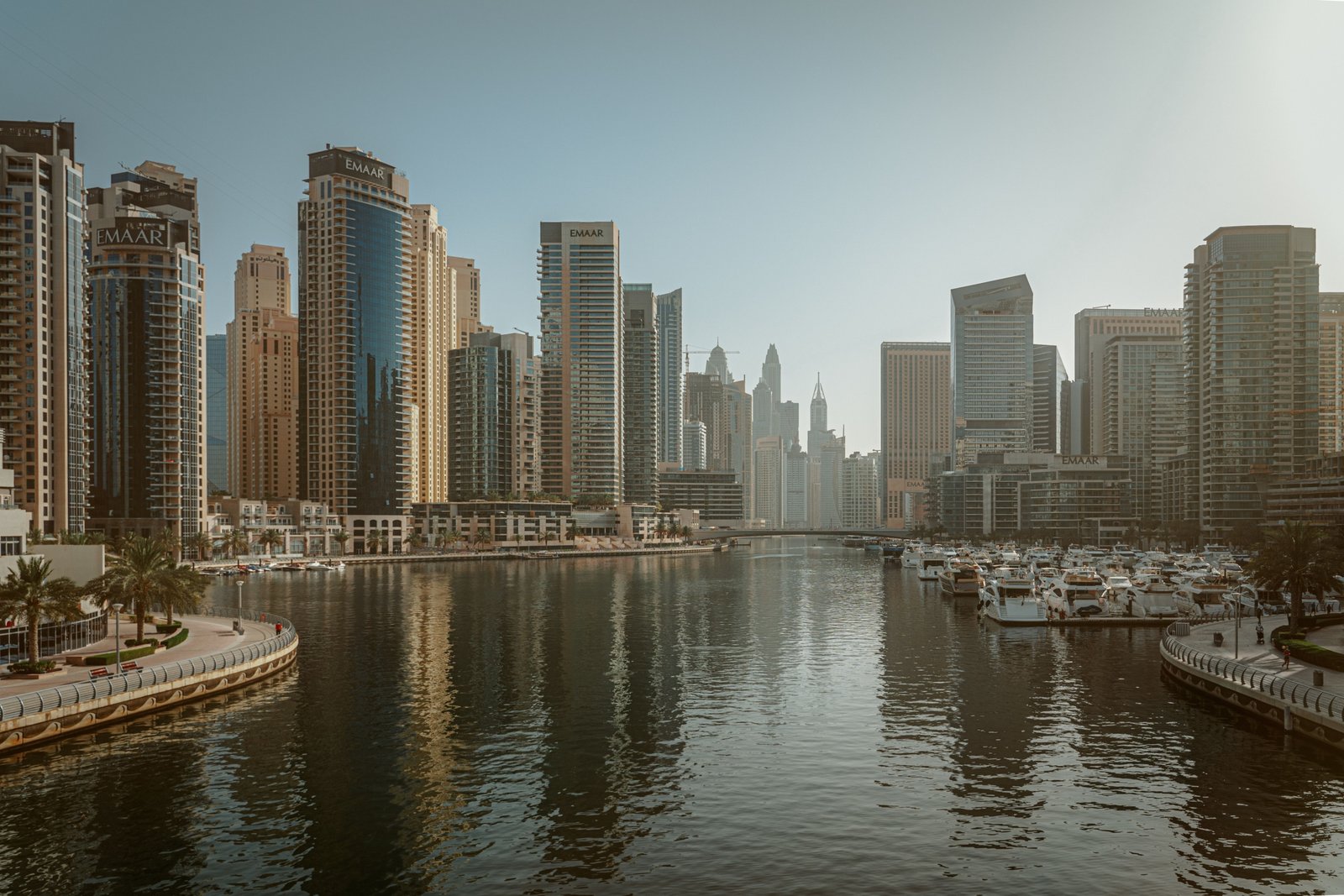
Search “Dubai Marina price per square foot” and you will land on a single number — usually somewhere between AED 2,058 and AED 2,661/sqft. That number is real, but it is also close to useless for deciding what to actually buy, because it blends three very different markets into one average: 20-year-old towers with courtyard views, mid-tier stock with partial marina glimpses, and new-build ultra-luxury towers with unobstructed waterfront frontage. A buyer who pays a top-tier price for a bottom-tier view, or the reverse — walks into the deal with the wrong expectations for both resale and rental income.
This guide breaks Dubai Marina down by the number that actually matters — the tower-age and view tier — and reconciles the real gap between long-term and short-term rental yield, using RERA’s own Q4 2025 rent data, licensed holiday-home yield benchmarks, and Dubai’s citywide supply pipeline through 2028.
Dubai Marina Prices: Why the “Average” Hides the Real Picture
Dubai Marina’s community-wide average of roughly AED 2,058-2,661/sqft (Property Monitor DLD transaction data, H1 2026; DXB Analytics) is a blend of three genuinely different price tiers:
The practical takeaway: a buyer comparing two Marina units at “similar” prices per sqft could be comparing an inner-facing unit in a premium building against a marina-view unit in an older one — and those two units will not perform the same way on resale or on rent. Before paying a view premium, confirm which tier the specific unit actually sits in, not just the building’s headline average.
A related trap is comparing Marina’s average against a citywide average and concluding it is simply “expensive.” It is — Dubai Marina prices roughly 9.5% above the broader Dubai market trend — but that premium buys genuine infrastructure maturity (see below), not just a view. The more useful comparison is tier-to-tier within Marina itself, not Marina-average against another community’s average.
Dubai Marina Infrastructure: Why the Premium Is Partly Real
Part of what a Marina buyer is paying for is infrastructure that took two decades to build out and cannot be replicated overnight in a newer community. The Dubai Tram runs an 11-station loop connecting Dubai Marina, JBR, Media City, and Palm Jumeirah, with a direct interchange at the Marina tram station to the Sobha Realty Metro Station on the Red Line via an air-conditioned footbridge across Sheikh Zayed Road (roughly a 6-8 minute walk). The JBR 2 station — the newest addition to the network — sits a short walk from Marina Walk itself, giving residents metro, tram, and beachfront promenade access within a compact, walkable radius that few other Dubai communities currently match. This is the practical difference between an “established” community and a “growth corridor”: the former already has the transit, retail, and lifestyle infrastructure in place; the latter is still building it, with the completion timeline risk that implies.
The Real Yield Gap: Long-Term vs Short-Term Rental
Every generic Marina guide quotes one blended yield figure. The real picture splits clearly into two paths, and the gap between them is wide enough to change which strategy makes sense for a given buyer.
Long-term (annual lease) yields
Standard long-let apartments in Dubai Marina return 5-7.5% gross, varying by unit size:
After service charges (see below), a typical agent fee (5% of annual rent), and 1-3 months of average vacancy between tenants, net yield typically lands 1-1.5 percentage points below the gross figure — so a unit quoting 7% gross is realistically closer to 5.5-6% net.
Short-term (licensed holiday home) yields
DTCM/DET-licensed holiday-home operators in Dubai Marina report 8.5-12% gross yield, at typical occupancy of 70-80% — a genuine 3-5 percentage-point uplift over the long-let equivalent. This is not a loophole; it requires a formal licence (see our full Dubai Holiday Home Permit guide for the DET registration process, costs, and building-approval requirements — many Marina towers restrict or prohibit short-term letting entirely, so building-level approval must be confirmed before assuming this route is available for a specific unit).
The short-term uplift is not free of cost, however:
– Management fees run 15-25% of gross revenue (versus a flat 5% agency fee on a long lease)
– Furnishing, turnover cleaning, and higher utility/internet costs are the owner’s responsibility
– DET licensing runs roughly AED 300 per bedroom annually (capped at AED 1,200), plus a one-time/annual registration fee of around AED 1,500-1,520 — so a 1-bedroom unit’s total licensing cost lands near AED 1,890-2,790 per year, before nightly Tourism Dirham charges collected from guests
Net of these costs, the realistic short-term uplift over long-term is closer to 1-3 percentage points net, not the full 3-5 point gross gap — still a meaningful edge for an owner willing to manage (or pay a manager for) the extra operational load, but not the number the blended marketing yield figures imply.
Service Charges: The Number That Erodes Every Yield Figure
Dubai Marina’s average service charge sits around AED 16/sqft/year, with a real range of AED 12-26/sqft depending on the tower’s age, amenity load, and management company. Older towers with basic amenities sit at the low end; newer buildings with extensive pools, gyms, and 24-hour concierge sit at the high end. For a typical 1,200 sqft two-bedroom, that is AED 14,400-31,200 annually — a swing large enough to change a deal’s real net yield by a full percentage point or more between two towers quoting similar sale prices. Confirm the exact per-sqft rate for the specific building via the DLD/Mollak service charge index before finalizing a purchase decision — see our full service charges guide for how to read and compare these figures across buildings.
Rent Growth: What RERA’s Q4 2025 Data Actually Shows
Per RERA’s Q4 2025 Rental Market Report, Dubai Marina recorded 16.4% year-on-year rent growth — the second-highest rate in Dubai after Business Bay’s 18.2%. In practical terms, a 1-bedroom that rented for roughly AED 88,000 in Q4 2024 is now commanding AED 100,000-115,000 on a fresh annual contract. Under the Smart Rental Index framework, existing tenants renewing a below-market lease can still only be raised within RERA’s tiered caps (0% if within 10% of market rate, up to a maximum 20% increase if the current rent is more than 40% below market) — so incoming buyers should model realistic rent-roll growth off the index, not off asking prices for brand-new tenancies.
Built-Out Scarcity vs the Citywide Supply Wave
This is the structural point most generic Marina guides skip entirely. Dubai’s citywide new-supply pipeline is large and real: Cavendish Maxwell’s most recent data shows roughly 47,000 units scheduled for H2 2026, approximately 162,500 for 2027, and approximately 128,200 for 2028 — a combined pipeline north of 330,000 units through 2028 (actual delivered volumes typically run well below scheduled figures due to delay slippage; H1 2026 saw only 41.3% of scheduled units actually complete, per Cavendish Maxwell). The communities absorbing the bulk of this new supply are concentrated elsewhere — Jumeirah Village Circle, Dubai South, Dubai Science Park, Business Bay, Downtown Dubai, and Dubai Healthcare City account for nearly 37% of H2 2026 scheduled completions alone.
Dubai Marina, by contrast, is effectively built out — there is very little undeveloped land left within the community for new towers. That scarcity is a real structural support for both rents and resale values, but it cuts both ways for a buyer: it means Marina is unlikely to see the kind of supply-driven softening some newer communities may face over the next two years, but it also means the “next Marina” — the next community to reach this kind of maturity and scarcity — is being built in the areas absorbing today’s supply wave, not in Marina itself. Buyers seeking pure new-build value appreciation from an early stage should look toward the growth corridors; buyers seeking rental stability, established infrastructure (tram, metro, walkability), and a scarcity-backed asset should weight Marina and comparable mature waterfront communities like Palm Jumeirah and Downtown Dubai more heavily.
Who Dubai Marina Actually Suits
- Long-term rental investors who want steady tenant depth (professionals, expats, corporate tenants) over maximum yield — Marina’s 5-7.5% gross range is solid, not spectacular, but tenant demand is consistently deep.
- Licensed short-term operators willing to manage (or outsource) a holiday-home operation and confirm building-level approval first — the 8.5-12% gross yield band is real but requires active management.
- Capital-preservation buyers who value built-out scarcity and established infrastructure over speculative new-build upside.
- Not the best fit for buyers chasing the highest possible headline yield on a pure numbers basis — several other Dubai communities post higher gross yields; see our best areas for rental yield guide for a citywide comparison, and our short-term vs long-term rental guide for how to decide between the two strategies for any Dubai property, not just Marina.
A Quick Note on the Buying Process
Dubai Marina is a fully freehold area, so the purchase mechanics follow the same DLD process as any other freehold Dubai community — a Memorandum of Understanding (Form F), a No Objection Certificate from the developer, transfer at the DLD Trustee Office, and the standard 4% DLD transfer fee plus agency and (if applicable) mortgage registration costs. If you’re buying for the first time, our step-by-step foreigner’s buying guide and DLD fees breakdown walk through the full process and real cost stack in detail — Marina does not add any community-specific purchase requirements beyond confirming the building’s short-term-letting policy if that is part of the strategy.
Frequently Asked Questions
What is the average price per square foot in Dubai Marina in 2026?
Community-wide averages range from AED 2,058-2,661/sqft depending on the data source and period, but this blends distinct tiers: AED 1,400-1,800/sqft for older, non-view stock up to AED 3,000-4,500+/sqft for premium waterfront and new-build towers.
What rental yield can I expect in Dubai Marina?
Long-term leases return roughly 5-7.5% gross (net typically 1-1.5 points lower after service charges, fees, and vacancy). Licensed short-term/holiday-home rentals return roughly 8.5-12% gross at 70-80% occupancy, with a realistic 1-3 point net uplift over long-term after higher management costs.
Do I need a licence to run a short-term rental in Dubai Marina?
Yes. Any short-term letting requires a DET (formerly DTCM) Holiday Home Permit, and many Marina towers restrict or prohibit short-term letting under their own building rules — confirm building-level approval before assuming the strategy is available. See our full DTCM/DET permit guide for the process and costs.
How much are service charges in Dubai Marina?
The community average is around AED 16/sqft/year, with a real range of AED 12-26/sqft depending on the tower’s age and amenities. For a typical 1,200 sqft two-bedroom, expect AED 14,400-31,200 annually.
How fast are rents rising in Dubai Marina?
RERA’s Q4 2025 Rental Market Report recorded 16.4% year-on-year rent growth in Dubai Marina, the second-highest in Dubai after Business Bay (18.2%). Growth is expected to moderate toward 4-6% in high-demand areas during 2026 as new citywide supply comes online.
Is Dubai Marina oversupplied?
No — Dubai Marina is effectively built out, with very little land left for new towers. Dubai’s large new-supply pipeline (roughly 330,000+ units scheduled 2026-2028) is concentrated in growth communities like JVC, Dubai South, and Business Bay, not in Marina.
Which Dubai Marina towers have the best rental demand?
Towers directly on Marina Walk or the promenade with unobstructed water views command the strongest rents and short-term booking demand, but also carry the highest purchase price per sqft. Mid-tier towers with partial views often deliver a better yield-to-price balance for long-term investors.
Is Dubai Marina a good investment compared to newer communities?
It depends on the strategy. Marina suits buyers prioritizing tenant depth, built-out scarcity, and established infrastructure over maximum headline yield. Buyers chasing the highest gross yields or early-stage new-build appreciation should compare against emerging growth corridors.
What is the difference between gross and net yield in Dubai Marina?
Gross yield is annual rent divided by purchase price before costs. Net yield subtracts service charges, agency/management fees, and vacancy — typically 1-1.5 points lower for long-term leases and can be higher still for short-term rentals once the 15-25% management fee is factored in.
Can foreigners buy property in Dubai Marina?
Yes — Dubai Marina is a freehold area open to full foreign ownership, one of the original freehold zones designated for international buyers.
Work With Sanaya Real Estate in Dubai Marina
Whether you’re weighing a long-term let against a licensed short-term operation, or trying to work out which tower tier actually matches your budget and view expectations, Sanaya Real Estate’s Dubai and London-based team can walk you through real, current listings and connect you with our property management arm for either strategy.
Message Sanaya on WhatsApp: +971 50 436 5316
Or contact our team directly to discuss buying, selling, renting, or managing a property in Dubai Marina.
Buyers weighing a Dubai Marina purchase should also understand how annual rent hikes are regulated, as covered in this guide to UAE rent increase rules and the RERA rental index.
Investors comparing tower-age price gaps in Dubai Marina will want to weigh financing terms too, and this breakdown of buy-to-let mortgages in the UAE explains how rental income and LTV affect approval.