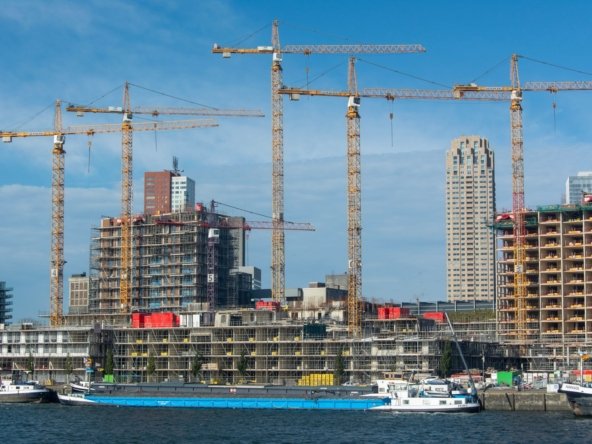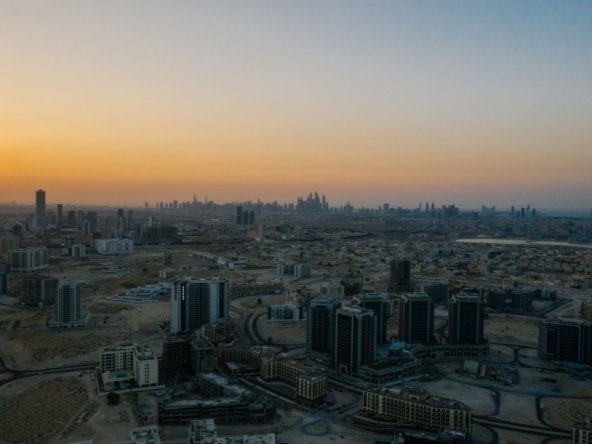

Dubai Design District, known locally as d3, has spent the last decade as a commercial-only creative hub. That’s changing. A small but growing residential masterplan, backed by 13.5% year-on-year capital growth and a genuinely differentiated tenant base of design, fashion, and architecture firms, has turned d3 into a real investment conversation rather than just a place people work. This guide lays out the actual 2026 numbers — price per square foot, yield by use type, and the honest maturity risk that comes with buying into a still-early residential story.
Published: 31 August 2026
What Is Dubai Design District (d3)?
d3 is a 21-hectare, TECOM Group-developed creative-economy district sitting between Downtown Dubai and Business Bay, close to Ras Al Khor. Launched in 2013 as a dedicated home for design, fashion, architecture, and creative-industry businesses, it now hosts more than 600 creative-economy companies, alongside showrooms, galleries, F&B, and Dubai Design Week’s home venue. For its first ten years, d3 was almost entirely commercial and retail space. The residential side is new, small, and still being built out — which is exactly why the investment case looks different from an established community like Downtown Dubai or Business Bay next door.
Where Does d3 Sit on the Map?
d3 borders Downtown Dubai to the northwest and Business Bay to the north, with Ras Al Khor Wildlife Sanctuary to the southeast. That position matters for investors: it puts residents within a short drive of Downtown’s retail and dining, Business Bay’s business district, and Dubai’s core road network (Al Khail Road, Sheikh Zayed Road access), without carrying Downtown’s premium price tag. If you’re comparing d3 against its immediate neighbors, see our Downtown Dubai area guide and Business Bay area guide for direct context.
Connectivity and Everyday Life in d3
Beyond the investment numbers, d3’s day-to-day livability matters for who actually rents or buys there. The district sits inside Dubai’s core road network, with practical access to Al Khail Road and onward to Sheikh Zayed Road, putting Downtown Dubai, DIFC, and Business Bay within a short drive. On-site, d3 already functions as a self-contained neighborhood for its working population: showrooms, art galleries, design studios, and a growing F&B scene cluster around The Cluster and Building 6/7, and the district hosts Dubai Design Week each year, which brings additional footfall and brand visibility. For residents, that means walkable access to cafes, restaurants, and creative-industry events without needing to leave the district — a genuine lifestyle draw for the design professionals and executives most likely to rent there, and a factor that supports the occupancy assumptions behind the yield estimates below.
d3 Property Prices in 2026: The Real Range
Published price-per-square-foot figures for d3 vary meaningfully depending on the source, the specific project, and the sales stage — so rather than pick whichever number looks most favorable, here is the honest spread confirmed across multiple sources this year:
| Segment | 2026 Price Range (AED/sqft) | What It Reflects |
|---|---|---|
| Residential phase (general) | 1,800 – 2,400 | Broad range across current residential-phase units |
| Blended average (DLD-linked estimate) | ~2,200 average | 13.5% YoY growth on 234 transactions over 12 months |
| New off-plan launches | 2,700 – 3,234 | Newest projects pricing at a premium to the existing stock |
For context, average asking prices across active d3 listings run from roughly AED 2.3 million to AED 27 million per unit, with a blended average asking price cited around AED 5.5 million — a range that spans everything from a compact one-bedroom to larger, design-forward units. The 13.5% year-on-year capital growth figure is one of the strongest of any central Dubai enclave tracked this year, but it is built on a relatively small transaction base (234 sales in 12 months), so treat it as a genuine but early trend rather than a mature, high-liquidity market signal. If you want the same honest-range treatment for a comparable central district, our DIFC investment guide and Meydan investment guide use the same methodology.
Rental Yields in d3: Residential vs Commercial
Most generic guides quote a single yield number for d3. That blends two very different tenant profiles — design-industry professionals renting apartments, and creative-economy companies leasing commercial space — so it’s more useful to split them:
| Use Type | Typical 2026 Gross Yield | Demand Driver |
|---|---|---|
| Residential apartments | 6% – 7% (some estimates to 9%) | Design professionals and executives wanting to live near work |
| Commercial / office space | 7% – 9% | Long-term corporate leases from creative-industry tenants |
| Dubai apartment average (citywide, for comparison) | 7.15% (April 2026, Property Monitor) | Citywide benchmark, not d3-specific |
Even the lower end of d3’s residential yield estimate sits close to Dubai’s citywide apartment average, and the commercial side benefits from d3’s built-in occupier base rather than needing to attract tenants from scratch. One important caveat: direct net-yield data specifically for d3 residential units isn’t yet published in the live DLD transaction feed, so every yield figure quoted across platforms — including here — is an estimate built from asking rents and sale prices, not a confirmed, transaction-level net return. Build in the usual deductions (service charges, management fees, vacancy) before treating a gross figure as your real return; our best areas for rental yield guide walks through that math in more detail.
Why Investors Are Looking at d3 Now
Three things are driving current interest in d3 as more than just a commercial address:
- A built-in tenant base. Unlike a brand-new residential community that has to attract its first residents from zero, d3 already has 600+ creative-economy companies and their employees on-site — a natural pool of renters and buyers who already work there.
- Continued TECOM investment. At d3’s 10-year milestone event in April 2025, TECOM disclosed further expansion plans covering 500,000 sq. ft. of additional gross leasable space, backed by AED 825 million in investment — a signal the district is scaling its commercial base, not standing still.
- Genuine scarcity in the residential product. Because the residential masterplan only started in earnest recently, current supply is limited relative to demand from people who already work in or near d3 — one of the reasons cited for the district’s above-average capital growth.
The Residential Story Is Still Early — Here’s the Honest Risk
It would be easy to only quote the 13.5% growth figure and stop there. The fuller picture: d3 operated as a commercial-only district for roughly ten years before residential development began, and as of 2026 there are only three confirmed residential projects in the district, with two more launching this year. That means:
- Limited resale comparables. With a small number of completed residential projects, resale price discovery is thinner than in an established community like Downtown Dubai or Business Bay.
- Concentration risk. Early residential buyers are effectively betting on TECOM continuing to invest in and grow the district’s creative-economy tenant base — the same driver behind current yields and appreciation.
- New-launch premium. The newest off-plan launches are pricing meaningfully above the existing blended average (AED 2,700-3,234/sqft vs. ~AED 2,200/sqft blended), so buying at launch means paying up-front for growth that hasn’t been realized yet.
None of this makes d3 a bad investment — it makes it an early-stage one, which is a different risk profile than a mature area and should be sized in a portfolio accordingly.
d3 and the Golden Visa: The AED 2 Million Route
d3 property can count toward the UAE’s real estate Golden Visa, which requires AED 2 million in qualifying property (or an approved investment fund) for a 10-year renewable residency. A February 2026 federal circular changed the financing rules meaningfully: it removed the earlier requirement to have paid 50% (or at least AED 1 million) upfront, meaning mortgaged and off-plan property can now qualify once the certified DLD valuation reaches AED 2 million, provided the bank or developer issues a No Objection Certificate (NOC). Off-plan buyers can apply for a “Conditional” Golden Visa once AED 2 million has been paid into the project’s escrow account, gaining residency status during construction rather than waiting for handover. Multiple d3 units can also be combined to reach the AED 2 million threshold, as long as each one is a registered, DLD-valued property.
One area of genuine ambiguity worth flagging honestly: sources differ on whether the February 2026 change fully removed the equity requirement for mortgaged property, or whether investors still need to demonstrate paid-up equity toward the AED 2 million threshold. Given that inconsistency, confirm your specific mortgaged-property scenario directly with GDRFA/ICP or a licensed immigration consultant — and see our full Golden Visa through real estate investment guide for the complete eligibility breakdown beyond d3 specifically.
d3 vs Downtown Dubai vs Business Bay
| Factor | d3 | Downtown Dubai | Business Bay |
|---|---|---|---|
| Market maturity | Early-stage residential | Established, high liquidity | Established, high liquidity |
| 2026 price positioning | Mid-range (AED ~1,800-3,200/sqft) | Premium, generally higher | Mid-to-premium |
| Core demand driver | Creative-industry professionals | Lifestyle, tourism, prestige | Business/corporate proximity |
| Resale comparables | Thin (3 residential projects) | Deep, well-documented | Deep, well-documented |
If you want more resale liquidity today, our Downtown Dubai and Business Bay area guides are the more established alternatives. If you’re comfortable trading some of that liquidity for earlier pricing and a differentiated tenant base, d3 is the more growth-oriented pick of the three.
What It Actually Costs to Buy in d3
Buying in d3 carries the same standard Dubai transaction costs as any other freehold area — DLD transfer fees, agency commission, and, for off-plan units, developer registration fees. Rather than restate figures that change and are easy to get wrong, see our dedicated Dubai property buying costs guide for the current fee breakdown, and factor those costs into your yield math before comparing d3 against another area on a like-for-like basis.
Off-Plan or Ready in d3?
With only three confirmed residential projects delivered and two more launching this year, most current d3 residential opportunities are off-plan rather than ready stock. That means the general off-plan trade-offs apply directly here: potentially lower entry pricing and developer payment plans, against construction and delivery-timeline risk. Our off-plan vs ready properties guide walks through how to weigh that decision in more detail.
Who Should Consider Investing in d3?
- Investors comfortable with early-stage risk in exchange for below-Downtown pricing and above-average recent capital growth.
- Buyers targeting the creative and design industry as tenants, who value being close to actual employers in the sector.
- Golden Visa applicants who can meet the AED 2 million threshold through a d3 unit, alone or combined with another qualifying property.
- Portfolio diversifiers who already hold positions in more established areas like Downtown Dubai or Business Bay and want exposure to a smaller, higher-growth-rate district alongside them.
d3 is less suited to buyers who need deep resale liquidity in the near term, or who want an established rental track record before committing.
Frequently Asked Questions
What is Dubai Design District (d3)?
d3 is a 21-hectare, TECOM-developed creative-economy district between Downtown Dubai and Business Bay, home to over 600 design, fashion, and architecture companies, with a residential masterplan that only recently began.
Is d3 a good investment in 2026?
d3 has delivered strong recent capital growth (13.5% year-on-year on DLD-linked estimates) and competitive yields (roughly 6-9% depending on residential vs. commercial), but the residential side is still early, with only three confirmed projects and thinner resale comparables than an established area.
What is the average price per square foot in d3?
Estimates vary by source and project: roughly AED 1,800-2,400/sqft for general residential-phase units, a blended average near AED 2,200/sqft, and AED 2,700-3,234/sqft for the newest off-plan launches.
What rental yields can I expect in d3?
Residential apartments are typically estimated at 6-7% gross (some sources cite up to 9%), while commercial space, driven by long-term corporate leases, is typically estimated higher at 7-9% gross. These are estimates, not confirmed net figures from DLD’s transaction feed.
Does buying in d3 qualify for the UAE Golden Visa?
Yes, provided the property (or combination of properties) reaches the AED 2 million DLD-valuation threshold. A February 2026 rule change allows mortgaged and off-plan units to qualify without the previous 50% upfront payment requirement, subject to a bank or developer NOC — confirm your specific scenario with GDRFA/ICP given some conflicting guidance on equity requirements.
Is d3 mostly off-plan or ready property?
Mostly off-plan currently. Only three residential projects are confirmed delivered or in progress, with two more launching this year, so ready resale stock remains limited.
How does d3 compare to Downtown Dubai for investment?
Downtown Dubai offers deeper resale liquidity and a more mature, tourism-driven demand base at premium pricing. d3 offers earlier-stage pricing, a distinct creative-industry tenant base, and higher recent capital growth, but with thinner comparables and more concentration risk.
How does d3 compare to Business Bay for investment?
Business Bay is an established, business-district-driven market with deep transaction history. d3 sits geographically close by but targets a narrower, creative-economy tenant profile with a smaller, newer residential stock.
What are the main risks of investing in d3?
Thin resale comparables due to only three confirmed residential projects, dependence on TECOM’s continued investment in the district’s creative-economy base, and a premium being charged on the newest off-plan launches relative to the current blended average.
Who manages the Dubai Design District?
d3 is developed and managed by TECOM Group, which also disclosed further expansion plans (500,000 sq. ft. of additional leasable space, AED 825 million investment) at the district’s 10-year milestone event in April 2025.
Considering Dubai Design District for Your Next Investment?
Sanaya Real Estate helps buyers evaluate emerging districts like d3 alongside established communities such as Downtown Dubai and Business Bay, matching the right stage of market maturity to your investment goals. Whether you’re weighing an off-plan d3 unit, a Golden Visa-qualifying purchase, or want a straight comparison against a more established area, our team can walk you through current listings and the real numbers behind them.
Contact Sanaya Real Estate at +971 4 566 2368 or info@sanayarealestate.com, or reach out via our contact page.
Message Sanaya on WhatsApp: +971 50 436 5316
Buyers financing a d3 unit rather than paying cash may also want to see how eligibility works in this guide to getting a Golden Visa through a mortgaged property in Dubai.