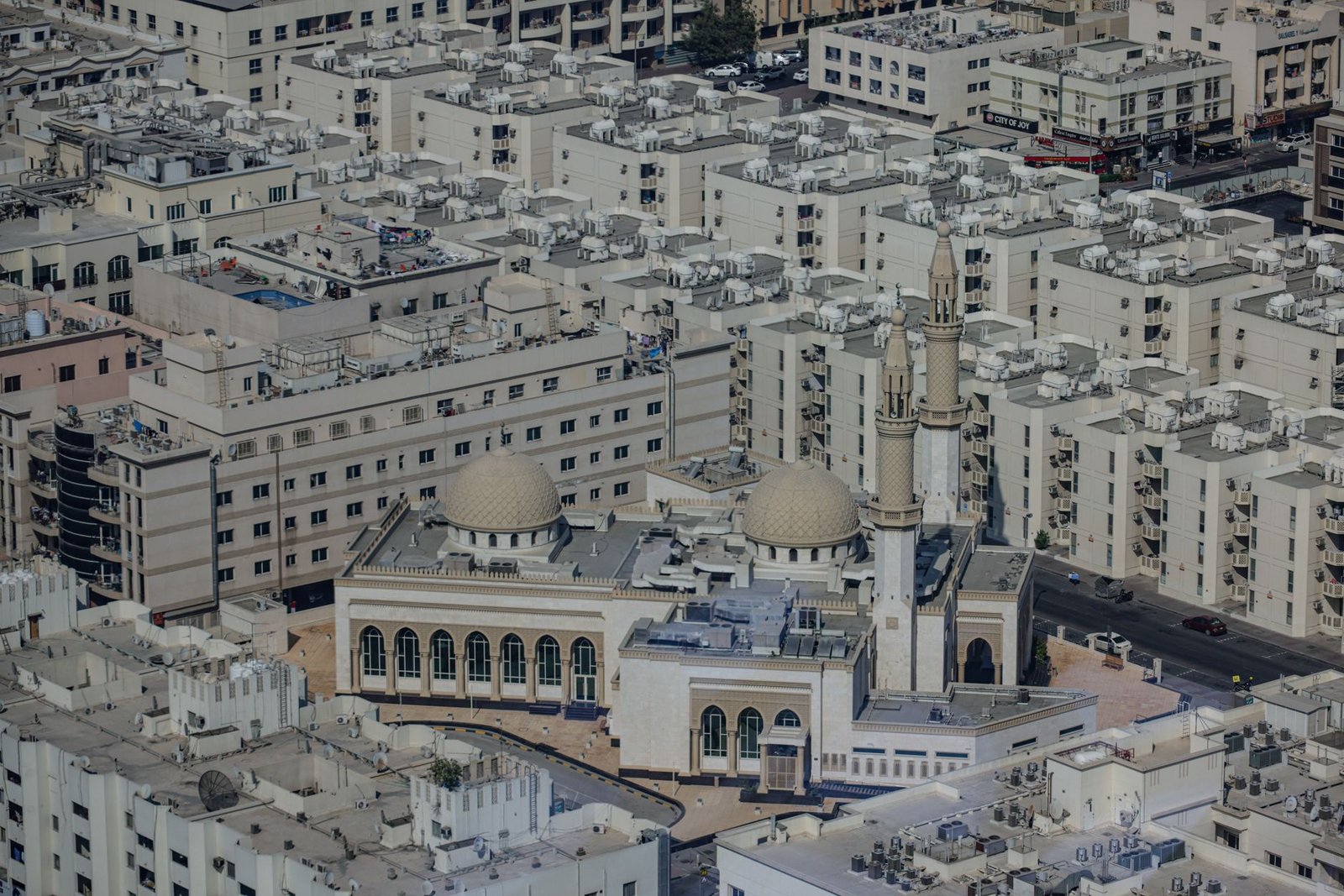
Al Satwa is one of the few central Dubai districts that the last decade’s building boom largely skipped. On 1 November 2026, Dubai Municipality changed that by publishing updated planning rules that allow a ground floor plus eight residential floors on large plots. Within hours, brokers were calling it a turning point. For anyone weighing Al Satwa Dubai property investment, the useful question is narrower: what does the rule actually change for a person who buys an apartment, and how reliable are the price and yield numbers being quoted alongside the headlines?
This guide separates what the official announcement says from what brokers are inferring. It also reconciles the sale price and yield figures that disagree across portals. Every number below was read from a named source in the same session we wrote this, and where sources conflict we show the range rather than choosing one.
Published: 7 November 2026
Key takeaways
- The 8-floor option applies to plots of 1,000 sqm or more, whether the plot is already that size or is created by merging two or more plots. It is a redevelopment incentive for landowners and developers.
- The official announcement says nothing about prices, and neither do the main news reports we read. Any claim that the rule will lift prices is opinion, not fact.
- Published gross yields for Al Satwa range from about 3.6% to 7%, depending on whether the source pairs recent sale prices with new-lease rents, and on which stock it measures.
- “Al Satwa” covers two very different products: older low-rise areas where foreign freehold is generally not available, and the freehold off-plan district of Jumeirah Garden City.
- Handover dates and starting prices for the same off-plan project differ between portals. Verify each project before paying anything.
What exactly did Dubai Municipality change in Al Satwa?
Dubai Municipality updated Al Satwa’s plot regulations on 1 November 2026, replacing a framework that mainly permitted attached villas with higher-density options. The Dubai Media Office release, The National, Khaleej Times and Dubai Week all describe the same package of changes.
| Plot type | What is now allowed | Notes |
|---|---|---|
| Plots on internal roads | Ground floor plus two residential floors | Replaces a framework that mainly allowed attached villas |
| Plots on external roads | Commercial ground floor plus two or three residential floors | Number of floors depends on location and planning requirements |
| Plots of 1,000 sqm or more (single or merged) | Ground floor plus eight residential floors, floor area ratio up to 3.5 | Merged plots may include the access lanes between them, subject to approved procedures |
| Application route | Build in Dubai platform | Dubai Municipality says it coordinated with service authorities on infrastructure and traffic |
The stated purpose, in the words of Dubai Municipality, is to “encourage the consolidation of smaller plots into larger sites better suited to integrated development.” The Executive Planning Department’s director, Mansour Al Rais, said the changes give landowners and investors “greater flexibility to redevelop their properties and make more efficient use of available land.”
One caveat matters for timing: Dubai Week reported that a start date and any fees were not published. The articles we read give no effective date or implementation schedule, so nobody can yet say when the first eight-floor building would be approved, let alone built.
What the rule does not change for a buyer
The rule changes what a plot owner may build. It does not directly change the value, ownership rights or rental income of an apartment you buy today. Three points follow from that.
First, the main beneficiaries on paper are owners of plots of 1,000 sqm or more, or owners who can assemble such a site. Satwa’s older plots are often small, so redevelopment depends on neighbours agreeing to combine land. That is a slow, negotiated process, and the official text itself says merged plots are “subject to approved procedures and requirements.”
Second, more permitted floors can mean more future supply as well as more future demand. Whether that supports or dilutes prices is something only transaction data over the coming years can answer. We are not stating a price effect, and we would be sceptical of anyone who does.
Third, the rule applies to Satwa’s low-rise plots. Buildings already under construction in the freehold district of Jumeirah Garden City sit on their own master-planned terms. Treat the announcement as context for the neighbourhood’s long-term direction rather than a guarantee for any specific project.
If you are weighing the broader market backdrop before committing, our analysis of the Dubai property market correction and the real price and transaction data explains how to read headline price claims.
Old Satwa versus Jumeirah Garden City: which one can you actually buy?
Jumeirah Garden City is described by multiple brokers as a freehold zone open to foreign buyers, while the older, traditional parts of Satwa are generally leasehold and not open to foreign freehold. Most of the sources we found are broker blogs rather than Dubai Land Department documents, and their wording on older Satwa varies: one says “restricted to GCC nationals,” another says only leasehold or usufruct of up to 99 years is possible for non-designated areas.
This distinction matters more than any planning headline. Before you pay a reservation fee, ask the agent for the plot’s freehold status and confirm it against the title deed or Oqood certificate. For the difference between those two documents, see our guide to Oqood versus title deed in Dubai, and for the broader ownership picture read freehold versus leasehold areas in Dubai.
Al Satwa Dubai property investment: why sale prices range from AED 1,750 to AED 2,489 per sqft
DLD-based sources mostly show roughly AED 2,000 to 2,500 per sqft for Al Satwa, while one broker guide cites about AED 1,750. The gap comes from what each source measures and when.
| Source | Price per sqft | Basis stated by the source |
|---|---|---|
| PropertyIndex | AED 2,489, up 18.5% over 12 months | DLD registered sales, 3,690 sales all time (page read 6 Nov 2026; an earlier read this week showed about AED 2,300 and +16%) |
| iRealEstate (as summarised in search) | AED 2,260 median, Q2 2026 | About 1,800 DLD transactions |
| DXB Analytics (as summarised in search) | AED 2,039 average | Not verified further |
| Qiyas (as summarised in search) | AED 1,977 median for 2-bedroom apartments | DLD data |
| Aigents Realty | AED 1,750, up 8.5% year on year | DLD-based overview covering 234 transactions in 12 months |
Two things stand out. PropertyIndex’s own figure moved between readings this week, which is a reminder that these portals recalculate continuously and that a single quoted number should be treated as a snapshot. And the sources do not even agree on how many transactions underlie the figure: 234 in the past 12 months for Aigents, against about 1,800 for iRealEstate’s quarterly median.
Aigents’ guide also gives unit-type ranges of AED 1,650 to 1,800 (studio), 1,700 to 1,850 (one-bedroom) and 1,750 to 1,900 (two-bedroom). Those sit below the DLD-heavy portals, which fits a mix that is weighted differently. Recent off-plan transactions in Jumeirah Garden City, according to one search summary, run around AED 2,270 to 2,414 per sqft, so new-build pricing is closer to the upper end than to the broker low.
The practical takeaway: when a listing is priced per sqft, compare it with at least two DLD-based sources and with recent sales in the same building, not with a headline area average.
Al Satwa Dubai property investment yields: why quotes run from 3.6% to 7%
Published gross yields for Al Satwa run from roughly 3.6% to 7%, and the spread is mostly methodology rather than a disagreement about the market. Here is what each source says.
| Source | Gross yield | How it gets there |
|---|---|---|
| Qiyas (2-bedrooms, as summarised in search) | About 3.6% | Median 2-bedroom rent around AED 93,500 a year against DLD sale prices |
| PropertyIndex | 4.4% | Typical rent about AED 96,000 a year against a typical sale price of about AED 2.2 million, from Ejari contracts and DLD sales |
| iRealEstate (as summarised in search) | About 6.0% | Q2 2026 |
| Property Finder, via Dubai Fast Living | 6.3% | Apartments, three months to 11 October 2026: average sold price AED 1,462,000, average new rent AED 81,200 |
| Aigents Realty | 6% to 7.5% in one section, 7.0% in another | Broker guide, inconsistent across its own sections |
We checked the arithmetic where we could. PropertyIndex’s AED 96,000 rent divided by its AED 2.2 million price gives about 4.4%, so that figure is internally consistent. The Property Finder figure is different: AED 81,200 divided by AED 1,462,000 gives about 5.6%, not 6.3%. The Dubai Fast Living article that quotes it explains why. The average price and the average rent come from different sets of flats, and Property Finder does not publish how it calculates its own yield, so you cannot reproduce 6.3% by dividing the two averages.
That is a useful lesson well beyond Satwa. A yield built from average sold flats and average rented flats can drift away from what any single apartment would earn. A yield that mixes small older units with large new ones can look high or low depending on the mix.
Two further points push published yields in opposite directions:
- Old stock versus new stock. Older, smaller apartments with modest prices can show higher percentage yields. Newly launched off-plan units price at a premium per sqft, which pushes the percentage down until rents catch up.
- Gross versus net. Every figure above is gross. Aigents puts service charges in newly developed mid-rise buildings at AED 12 to 18 per sqft per year. As a purely illustrative example using Property Finder’s figures: a 700 sqft apartment at AED 15 per sqft pays AED 10,500 a year. Deduct that from AED 81,200 of rent and you are at AED 70,700, which is about 4.8% of the AED 1,462,000 average price, before agent fees, maintenance and vacancy. Our guide to service charges in Dubai communities explains how to check a specific building’s charge.
For a broader comparison of what yields look like across areas, see our best areas in Dubai for rental yield guide.
What do rents look like in Al Satwa?
Rents depend heavily on unit type and building age, and the sources we could read give a wide range. Bayut, citing DLD data, reports an average annual rent of about AED 105,359 (as summarised in search; the page’s detailed figures did not load for us). PropertyIndex’s project-wide rent is about AED 96,000 a year. Aigents lists annual rent ranges of AED 45,000 to 60,000 for a studio, AED 65,000 to 85,000 for a one-bedroom and AED 95,000 to 125,000 for a two-bedroom.
We could not read a DLD-based breakdown by unit type that we trust for every size, so we are not publishing a single rent number per bedroom count. If you are underwriting a purchase, ask a Sanaya agent for recent Ejari-registered rents in the exact building rather than relying on an area average. Our guide to short-term versus long-term rental investment in Dubai covers the holiday-let route, which requires its own permit.
The off-plan pipeline in Jumeirah Garden City
Property Finder lists 44 projects in Al Satwa, with launch prices from the mid-AED 700,000s to above AED 2 million and handovers running from late 2026 to 2029. We read the first 24 on 6 November 2026. Every figure below is “starting price” and “handover” as shown by Property Finder, not a developer-confirmed number.
| Project (developer) | Starting price listed | Handover listed |
|---|---|---|
| Stamn Two (Stamn Real Estate Development) | AED 756,000 | Q1 2027 |
| Purvanchal Triana Residences (Purvanchal Developers) | AED 946,000 | Q1 2027 |
| Double Tree by Hilton (Hilton) | AED 1,620,000 | Q2 2027 |
| The Elysian Residence (New MFOUR Development) | AED 950,000 | Q3 2027 |
| JAD288 (JAD Global) | AED 850,288 | Q4 2027 |
| Linea (Holm Developments) | AED 960,000 | Q1 2028 |
| Rabdan Gardens (Rabdan Developments) | AED 1,165,000 | Q1 2028 |
| Vibe by Arsenal East (Arsenal East) | AED 950,000 | Q3 2028 |
| The One by Rabdan (Rabdan Developments) | AED 1,150,000 | Q4 2028 |
| Holm Central (Holm Developments) | AED 1,050,000 | Q1 2029 |
The same page also lists several completed projects marked “Ready,” including Evergr1n House 4, Coral By Vision and Whitestone Residence, which matters if you want to avoid construction risk entirely.
Do not treat this table as settled. A second search summary, drawing on ezre.ae, shows different numbers for some of the same projects. For example, Stamn One is listed at Q1 2027 and AED 1.1 million, Linea by Holm at Q2 2028 and AED 1.3 million, and Vibe at Q3 2028 and AED 1.0 million, against Property Finder’s AED 960,000 for Linea. The search summary also noted that Bayut and ezre.ae disagree on Stamn Yuni (Q1 2027 at AED 825,000 versus Q3 2027 at AED 1.4 million) and on JAD 288 (Q4 2027 versus Q1 2028 on another site). Differences like these usually reflect different unit types, launch phases or listing dates. They are exactly why you should verify against the developer’s Oqood registration and escrow details before paying.
Our guides to Dubai escrow account rules, off-plan payment plans and off-plan project delays and your legal remedies set out what to check. When the building completes, use our handover and snagging checklist. Also note that the small-unit trend behind many of these launches is covered in Dubai off-plan studio apartments in 2026.
How Al Satwa compares with nearby areas
Satwa sits between Downtown Dubai and the coast, and Aigents notes that adjacent Downtown projects trade above AED 2,800 per sqft. That positions Jumeirah Garden City new-builds, at roughly AED 2,270 to 2,414 per sqft on the recent transactions cited above, as a lower-priced neighbour rather than a discount to the older stock. For comparison with established central areas, see our area guides for Downtown Dubai and Business Bay, or browse all Dubai area guides. If your budget is the main constraint, our guide to affordable Dubai real estate under AED 2 million compares other options.
The real risks of Al Satwa Dubai property investment
- Construction and construction-noise risk. With dozens of off-plan projects in one district, heavy building activity could continue for years. The new rule could add to it.
- Supply risk. Property Finder alone lists 44 projects in Al Satwa. If many complete in the same 2027 and 2028 windows, tenants will have a lot of choice, which can pressure rents.
- Resale and exit. Small studios in a crowded launch cycle compete against each other on resale.
- Data risk. As shown above, even DLD-based portals disagree. A decision built on one number is fragile.
- Ownership risk. Confirm freehold status on the specific plot.
A short checklist before you buy in Al Satwa
- Confirm the plot’s freehold status through the title deed or Oqood certificate.
- Check the developer’s escrow account and RERA project registration.
- Compare the per-sqft price with at least two DLD-based sources and recent sales in the same building.
- Ask for recent Ejari-registered rents for the same unit type in the same building.
- Calculate net yield after service charges, using the actual building charge.
- Read the payment plan and the handover clause, and check what happens if the date slips.
- Budget for transfer and registration costs; see Dubai property buying costs.
Frequently asked questions
What is the new Al Satwa planning rule?
Dubai Municipality announced on 1 November 2026 that plots of 1,000 sqm or more in Al Satwa, including sites made by merging two or more plots, can have a ground floor plus eight residential floors, with a floor area ratio of up to 3.5. Smaller plots on internal roads can have a ground floor plus two floors, and plots on external roads can have a commercial ground floor plus two or three residential floors.
Will the 8-floor rule raise property prices in Al Satwa?
Nobody can say yet. The official announcement and the news reports we read do not mention prices, and no start date or fees were published. More allowed floors could add supply as well as demand. Confirm with a Sanaya agent before relying on any price forecast.
Can foreigners buy property in Al Satwa?
In Jumeirah Garden City, broker sources describe a freehold zone open to foreign buyers. Older, traditional parts of Satwa are generally described as leasehold, with foreign freehold not available. Confirm the status of the specific plot against the title deed or Oqood certificate.
What is the rental yield in Al Satwa?
Published gross yields range from about 3.6% to 7%: roughly 3.6% (Qiyas, 2-bedrooms), 4.4% (PropertyIndex), about 6.0% (iRealEstate), 6.3% (Property Finder) and 6% to 7.5% (Aigents). The spread reflects different methods and different stock. All are gross, before service charges and costs.
What is the price per square foot in Al Satwa?
DLD-based sources mostly show AED 2,000 to 2,500 per sqft (PropertyIndex AED 2,489, iRealEstate AED 2,260, Qiyas AED 1,977 for 2-bedrooms), while Aigents cites about AED 1,750. Portal figures are recalculated regularly, so treat each as a snapshot.
How much do off-plan apartments in Jumeirah Garden City cost?
Property Finder shows starting prices from about AED 756,000 to above AED 2 million, with handovers from late 2026 to 2029. Other portals show different prices and dates for some of the same projects, so verify each one with the developer and the Oqood record.
Does the new rule help owners of existing apartments?
Not directly. It governs what can be built on a plot, not the value or rent of a unit already owned. Indirect effects, if any, would depend on future redevelopment and the supply it creates.
How do I apply to redevelop a plot in Al Satwa?
Dubai Municipality says applications go through the Build in Dubai platform. Plot owners should read the published requirements and take professional advice on merging plots, since combined sites are subject to approval.
What service charges apply in new Satwa buildings?
Aigents puts service charges in newly developed mid-rise buildings at AED 12 to 18 per sqft per year. Check the actual charge for the specific building before calculating net yield.
Is Al Satwa a good investment?
It depends on your goal and on which Satwa you mean. Newly built freehold apartments in Jumeirah Garden City suit buyers who accept construction-cycle and supply risk for a lower entry price near central Dubai. Anyone expecting a quick uplift from the planning rule is relying on a forecast the official sources do not support.
Talk to Sanaya before you commit
Sanaya Real Estate helps buyers, sellers and landlords with buying, selling, renting and property management in Dubai, plus mortgage services and Golden Visa assistance. If you are comparing Al Satwa with other central areas, or you want a second opinion on a specific project’s price, handover date and service charge, our team can check it against current transaction data. Reach us through our contact page, call +971 4 566 2368, or email info@sanayarealestate.com.
Message Sanaya on WhatsApp: +971 50 436 5316
This guide is general information, not financial or legal advice. Figures were read from the sources named above on 6 November 2026 and may change; confirm with a Sanaya agent before acting.
Property brokerages and managers may also want to read about AI accounting automation for UAE property brokerages and property managers, which covers month-end tasks and the controls finance must keep.
Before settling on a budget, it helps to see what a 1, 2 or 3 million dirham mortgage really costs per month in Dubai and what calculators leave out.