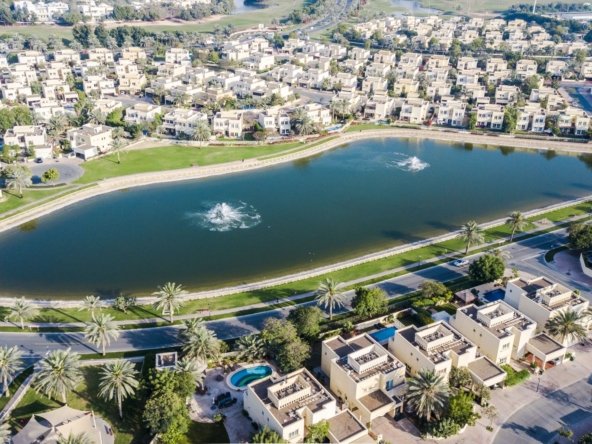

Dubai vs London property investment is usually argued with two headline yield numbers, and those numbers hide most of the difference. On paper Dubai’s gross yield is well above London’s. After costs and tax, the gap widens, but by a different amount than most comparison articles claim, and it is the entry cost, not the yield, that surprises most London-based buyers.
Published: 30 September 2026
This guide runs both markets through the same steps: what you pay to buy, what the property earns, what the taxman takes, and what you pay when you leave. Every rate below was checked in September 2026 against GOV.UK, the Office for National Statistics (ONS) or named Dubai market sources. Where sources disagree, or where a figure could not be verified, we say so or write “confirm with a Sanaya agent” rather than guess. Sanaya has offices in both Dubai and London. This is general information, not tax advice.
The short answer: which market wins in 2026?
On cash flow and total costs, Dubai comes out clearly ahead for a non-resident investor; on liquidity, legal familiarity and long-run capital growth track record, London still has arguments. Using the benchmark figures in this guide, a typical Dubai apartment nets roughly 4.8% to 5.4% before management and vacancy, with no personal income tax on the rent. A typical London flat nets roughly 1.6% to 3.1% after UK income tax, and the buyer starts with a stamp duty bill of around 10% of the price if they are a non-UK resident buying an additional property.
Neither market is a guaranteed win. Dubai residential prices have pulled back in 2026 (see our Dubai property market correction analysis), and London house prices have also fallen. The maths below tells you what each market has to deliver in price growth to break even against the other.
Gross yield: what each market actually pays in rent
Dubai’s citywide average gross rental yield was 6.34% in August 2026, according to Engel & Völkers. Other brokerages publish figures between roughly 6% and 7.15% depending on method and property mix, and individual communities differ widely. Mid-market communities such as Jumeirah Village Circle and Arjan are commonly quoted at 8% to 9.5% gross, while Palm Jumeirah, Downtown and prime villas can sit at 4% to 6%. Our best areas for rental yield guide covers the area breakdown.
London’s gross yield depends heavily on which figure you trust, so we calculated one from official data. ONS reported the average London private rent at £2,332 a month in August 2026 (up 3.5% in twelve months) and the average London house price at £569,000 in July 2026. Annual rent of £27,984 divided by £569,000 gives a gross yield of about 4.9%. That is a rough ratio, because average rents and average prices come from different property mixes, but it is built from official figures rather than a broker’s marketing headline.
You will see other London numbers. Investor guides quote 5% to 6% for the city, up to about 6% in outer east and south-east postcodes such as East Ham, and as little as 2.5% in prime areas like Notting Hill. One dataset built from Land Registry prices and Valuation Office rents puts Greater London nearer 3.5%. The honest range is roughly 3.5% to 6%, with 4.9% a fair central figure.
| Market | Gross yield benchmark | Source and date |
|---|---|---|
| Dubai (citywide residential) | 6.34% | Engel & Völkers, August 2026 |
| Dubai (mid-market communities) | c. 8% to 9.5% | Broker area analyses, 2026 |
| Dubai (prime: Palm, Downtown, villas) | c. 4% to 6% | Broker area analyses, 2026 |
| London (calculated: average rent / average price) | c. 4.9% | ONS, Aug 2026 rent, Jul 2026 price |
| London (investor-guide range) | c. 3.5% to 6% | Various, 2026 |
Cost to buy: the biggest gap nobody puts in the headline
A non-UK-resident buying an additional home in England pays roughly 10% of the price in stamp duty, against about 6.3% in total transaction costs for the same buyer in Dubai. The stamp duty gap alone can eat two to three years of the yield advantage before either property earns a pound.
London: SDLT for non-residents
Stamp Duty Land Tax (SDLT) in England and Northern Ireland uses these standard residential bands on GOV.UK: 0% up to £125,000, 2% from £125,001 to £250,000, 5% from £250,001 to £925,000, 10% from £925,001 to £1.5 million, and 12% above that. On top of that, GOV.UK says you will usually pay a 5% surcharge if buying means you will own more than one residential property, and a 2% surcharge if you are a non-UK resident. For an overseas investor buying a second or investment property, both apply, so 7% is added to every band.
Worked example at the ONS London average price of £569,000 (non-UK resident, additional property):
- 0 to £125,000 at 7%: £8,750
- £125,001 to £250,000 at 9%: £11,250
- £250,001 to £569,000 at 12%: £38,280
- Total SDLT: £58,280, or about 10.2% of the price
The same purchase as a UK-resident’s only home would cost £18,450 (3.2%). Note that Scotland uses a different tax (LBTT) and Wales uses Land Transaction Tax, both with their own rates and no non-resident surcharge; this comparison covers England. Confirm the position for your exact circumstances with a UK solicitor, since residency is decided by a day-count test and can be refunded if you become UK resident within two years.
Dubai: the DLD fee and the rest
The Dubai Land Department (DLD) charges a 4% transfer fee on the purchase price, which is legally split 2% each between buyer and seller but in practice is usually paid entirely by the buyer unless the sale agreement says otherwise. Property Finder and other market sources also list a trustee office fee of AED 4,000 plus 5% VAT (AED 4,200) for properties of AED 500,000 or more, small fixed title and administration charges, and agency commission of about 2% plus 5% VAT. Banks no longer finance these upfront costs, so they are paid in cash. Our full Dubai property buying costs guide breaks each line down.
Worked example at AED 2,000,000 (buyer pays the full 4%):
- DLD transfer fee (4%): AED 80,000
- Trustee office fee: AED 4,200
- Agency commission (2% plus 5% VAT): AED 42,000
- Total: about AED 126,200, or roughly 6.3%, before small fixed fees and any developer NOC charge (confirm the exact figure with a Sanaya agent)
Market sources generally put total one-off costs at 6% to 8% of the price, which agrees with this. A UK buyer normally pays no agency commission, which is why the London figure above is stamp duty alone; UK solicitor and survey costs are extra on both sides of the comparison and vary by transaction.
Running costs: service charges, management and vacancy
Dubai service charges typically take 15% to 25% of gross rental income, according to Real Estate Club Dubai. Mid-market apartments generally fall in an AED 8 to AED 30 per square foot range annually, with figures such as AED 18 per sq ft in Business Bay and AED 22 in Dubai Marina cited, and luxury towers well above that. A worked example from the same source shows a Business Bay one-bedroom falling from a 7.1% gross yield to 5.7% after a AED 15 per sq ft service charge. Check the exact building’s rate in the DLD/RERA service charge index before buying. See our service charges guide for how the index works.
London running costs are similar in kind: ground rent, service charge on flats, insurance, letting and management fees and repairs. Investor sources typically put London net yields 1 to 2 percentage points below gross before tax. That range comes from secondary sources, so treat it as an assumption to test against a real property’s numbers rather than an official statistic.
Tax on rental income: the part that changes everything
Individuals in Dubai pay no personal income tax on rental income, while UK rental income is taxed at your marginal income tax rate, currently 20%, 40% or 45%. For a non-UK resident with a UK rental property, the letting agent (or the tenant, if there is no agent) normally deducts basic-rate income tax from the rent under HMRC’s Non-resident Landlord Scheme and pays it to HMRC. You can apply on form NRL1 to receive rent without deduction, but that does not make the income tax-free; you still calculate and settle the liability through a UK Self Assessment return.
Rates are about to go up. From 6 April 2027, property income in England, Wales and Northern Ireland will be taxed at its own rates, each two percentage points higher: 22% basic, 42% higher and 47% additional. The change was announced at the November 2025 Autumn Budget and legislated in the Finance Act 2026. The relief for finance costs on residential lettings rises to 22% in line with the new basic rate. The numbers in the model below use today’s rates; London’s position from April 2027 is weaker still.
If a Dubai investor holds the property through a company rather than personally, corporate tax rules can apply, so the ownership structure matters. Confirm the structure with an adviser before buying.
Net yield model: same steps, both markets
The table below is a stylised model, not a forecast. It uses the benchmark gross yields above, deducts the running-cost ranges above, and applies UK tax at each band. It assumes a cash purchase and ignores agent management fees and vacancy in Dubai (add roughly a point or more for realism), and mortgage interest.
| Step | Dubai | London |
|---|---|---|
| Gross yield used | 6.34% | 4.92% |
| Running costs | 15% to 25% of rent (service charges) | 1 to 2 percentage points |
| Net yield before tax | c. 4.8% to 5.4% | c. 2.9% to 3.9% |
| Net after 20% income tax | No change: c. 4.8% to 5.4% | c. 2.3% to 3.1% |
| Net after 40% income tax | No change: c. 4.8% to 5.4% | c. 1.8% to 2.4% |
| Net after 45% income tax | No change: c. 4.8% to 5.4% | c. 1.6% to 2.2% |
The income gap ranges from roughly 1.7 percentage points (London’s best case after 20% tax against Dubai’s worst case) to roughly 3.8 points (Dubai’s best case against London’s worst case at 45% tax). Even a Dubai buyer who adds a full percentage point for management and vacancy stays clearly ahead on income. For further Dubai net-yield detail on individual property types, see our guide to short-term vs long-term rental investment.
Capital gains and exit costs
Dubai charges no capital gains tax on individuals’ real estate sales, while UK residential gains are taxed at 18% or 24% (2026/27) above a £3,000 annual exempt amount. GOV.UK lists those rates for residential property gains: 18% for gains within the basic rate band and 24% above it. Non-UK residents must report every disposal of UK property to HMRC and pay any tax within 60 days of completion, even if no tax is due, and a missed deadline brings an automatic £100 penalty.
In Dubai, selling costs are transactional. The buyer normally bears the 4% DLD fee, and the seller pays agent commission and, for off-plan resales, developer fees. Our Dubai selling guide covers the sequence.
Total return: how much price growth does London need to catch up?
Over five years, London would need roughly 3 to 4 percentage points more annual price growth than Dubai to deliver the same net total return for a non-resident investor. This uses the mid-point of each market’s net yield and the entry costs worked out above.
- Dubai: mid-point net yield about 5.1% a year, times five years, is about 25.4%. Subtract 6.3% entry costs: about +19% before any price change.
- London, basic-rate taxpayer: mid-point net yield about 2.7% after tax, times five years, is about 13.7%. Subtract 10.2% SDLT: about +3.5% before any price change.
- London, higher-rate taxpayer: mid-point net yield about 2.1%, times five years, is about 10.3%. Subtract 10.2% SDLT: about 0% before any price change.
Dubai therefore starts roughly 15 to 19 percentage points ahead after five years, which is 3 to 4 percentage points of extra annual price growth London must supply to catch up. The model excludes currency moves, mortgage costs, exit costs and capital gains tax, and it compares a AED 2 million Dubai purchase with a £569,000 London purchase, so percentages shift with price. Change any input and the result moves, which is why the exercise is worth doing with real property numbers.
Prices are not guaranteed to rise in either city. ValuStrat put Dubai residential values 3.1% lower year on year in its September 2026 release, and Cavendish Maxwell showed a 1.7% annual decline, the first in its dataset since February 2021. ONS reported London house prices 3.3% lower in the twelve months to July 2026, at an average of £569,000. Buying in either city means accepting that capital values can fall as well as rise.
Currency, liquidity and residency
Currency: The UAE dirham is pegged to the US dollar, so a dollar or dirham earner has little exchange-rate risk in Dubai. A sterling earner carries GBP/AED exchange risk both ways, which can add or subtract more than a full year of yield. Check the live rate and consider hedging before committing.
Liquidity: London is one of the deepest resale markets in the world, and a well-priced flat usually sells. Dubai’s resale market is active too, but off-plan assignments and some communities can be slower to exit. Neither market is instant, so confirm realistic timelines for your specific property with an agent.
Residency: Dubai offers a real residency route through property. The Golden Visa requires property of at least AED 2 million (see our Golden Visa guide), and a shorter property-investor visa has been available since April 2026 without the AED 2 million minimum. Buying UK property does not by itself grant UK residency. For an investor who wants a Gulf base, that is a real point in Dubai’s favour.
Financing: mortgage or cash?
Mortgage costs change the comparison in both cities. Non-resident mortgage terms in Dubai vary by lender, and UK landlords can only claim a tax credit for mortgage interest (20% today, rising to 22% in April 2027) rather than deducting it from rent. We do not quote lender rates here because they change weekly. Read our mortgage vs cash purchase guide and confirm current terms with a lender.
Managing the property from abroad
Both markets are workable remotely if you have good management. Dubai landlords should budget for a property manager, service charge follow-up, and RERA-compliant tenancy registration. London landlords need to manage HMRC’s non-resident landlord scheme, tenant legislation and safety certificates. Sanaya offers property management, and our overseas landlord guide covers what to expect. If you are a UK resident weighing the move, our London-to-Dubai buyer’s guide explains the buying process step by step.
Who should choose which market?
- Choose Dubai if you want income, a tax-free rental structure, a lower entry cost and possible residency, and can accept a younger market with more volatile pricing.
- Choose London if you want a long track record, deep legal precedent, a base for UK-resident family or a sterling-denominated asset, and can accept lower net income and heavier tax.
- Consider both if you want to diversify across currency and jurisdiction. Sanaya’s London and Dubai offices can talk through both sides of that decision.
Frequently asked questions
Is Dubai or London better for property investment in 2026?
For net rental income and total transaction costs, Dubai is stronger on the benchmark figures in this guide. For liquidity, legal familiarity and a sterling asset, London is stronger. Which is “better” depends on your tax position, currency, and goals.
What is the average rental yield in Dubai vs London?
Engel & Völkers reported a 6.34% citywide gross yield in Dubai for August 2026. London’s gross yield calculated from ONS average rent (£2,332 a month) and average price (£569,000) is about 4.9%, with other sources ranging from roughly 3.5% to 6%.
Is there tax on rental income in Dubai?
Individuals do not pay personal income tax on rental income in the UAE. If you hold property through a company, corporate tax rules can apply, so confirm the structure with an adviser.
How much stamp duty does a non-resident pay in England?
Standard SDLT bands from 0% to 12% apply, plus a 5% surcharge if you will own more than one residential property and a 2% surcharge for non-UK residents. On £569,000 that totals £58,280, about 10.2%.
What are the buying costs in Dubai?
A 4% DLD transfer fee (usually paid by the buyer), a trustee office fee of AED 4,200 on properties of AED 500,000 or more, small fixed fees and about 2% plus VAT agent commission, so roughly 6% to 8% in total according to market sources.
Is there capital gains tax on property in Dubai?
No capital gains tax applies to individuals selling Dubai residential property. UK residential gains are taxed at 18% or 24% in 2026/27 above a £3,000 exemption, and non-residents must report within 60 days of completion.
Are UK property income tax rates changing?
Yes. From 6 April 2027, property income is taxed at 22%, 42% and 47% in England, Wales and Northern Ireland, two points above the current bands.
Can I get residency by buying property in Dubai?
Yes. The Golden Visa requires AED 2 million of property, and a shorter investor visa has no minimum value since April 2026. Buying UK property does not grant UK residency by itself.
Are property prices falling in Dubai and London?
Both have softened. ValuStrat has Dubai down 3.1% year on year and Cavendish Maxwell down 1.7%; ONS has London house prices down 3.3% in the year to July 2026.
Should I use a mortgage in Dubai or London?
It depends on lender terms and your tax position. UK landlords get only a 20% tax credit on mortgage interest, so financing costs hit UK yields harder. Confirm current rates with a lender.
Weighing Dubai against London for your own budget? Sanaya Real Estate works from offices in Dubai and London and can walk you through buying, letting and managing property in Dubai. Speak to our team via our contact page, call +971 4 566 2368 or email info@sanayarealestate.com. For UK tax and stamp duty specifics, take advice from a UK-qualified adviser.
Message Sanaya on WhatsApp: +971 50 436 5316
If you plan to let out a Dubai property, this guide to UAE rent increase rules and the RERA rental index explains how much rent can legally rise, which affects your long-term yield.
Ownership type matters when comparing Dubai with London, so it is worth reading how freehold versus leasehold property affects a UAE mortgage before you commit.